Close
Try Your Luck
With Mozaico
With Mozaico

Try Your Luck
With Mozaico
With Mozaico
Email Already Subscribed

we ship worldwide

money back guarantee

exclusive

630.300.3942
What can we help you with?
Shipping & Taxes. FAQ.630.300.3942
What can we help you with?
How to install a mosaic.Get one-on-one expert advice from our lead designer to help you transform any area around your home or work.
Fill out the form below to submit your designer question.
Take a picture of a room in your home, a floor area or a table top that you would like to ask a question about - or simply anything you would like to make into mosaics.

Cover Photo: by Mosaic Artist David Chidgey, artglassmosaics.com
Ever since the world began, stones were used by mankind as a daily tool. Metals are a vital part of our planet and are found in almost all rocks and soils. Nowadays, stones and gemstones are used to cut other stones or to make jewelry adornments and mosaics.
In early antiquity, mosaics were created with naturally formed pebbles. Nevertheless, by 200 BCE tesserae stones were being used and hand cut in the shape of cubes. Actually, it was during the Roman Empire that mosaic art reached its supreme glory, and tesserae were frequently used in mosaic panels and floor mosaics.
Discover 10 stones you can use to create marvelous mosaics!
Marble is a non foliated metamorphic rock and the result of a transformation of a pre-existing rock. It is commonly used for sculptures and building constructions. However, since the Roman Empire, mosaics were created using local resources and natural stones. In addition, marble tessera were frequently used in the making of mosaic floors, vaults and walls. They used to cut it into small cubes to create small tesserae.
Finally, after they cut it they set it into figurative designs and Roman geometric patterns.

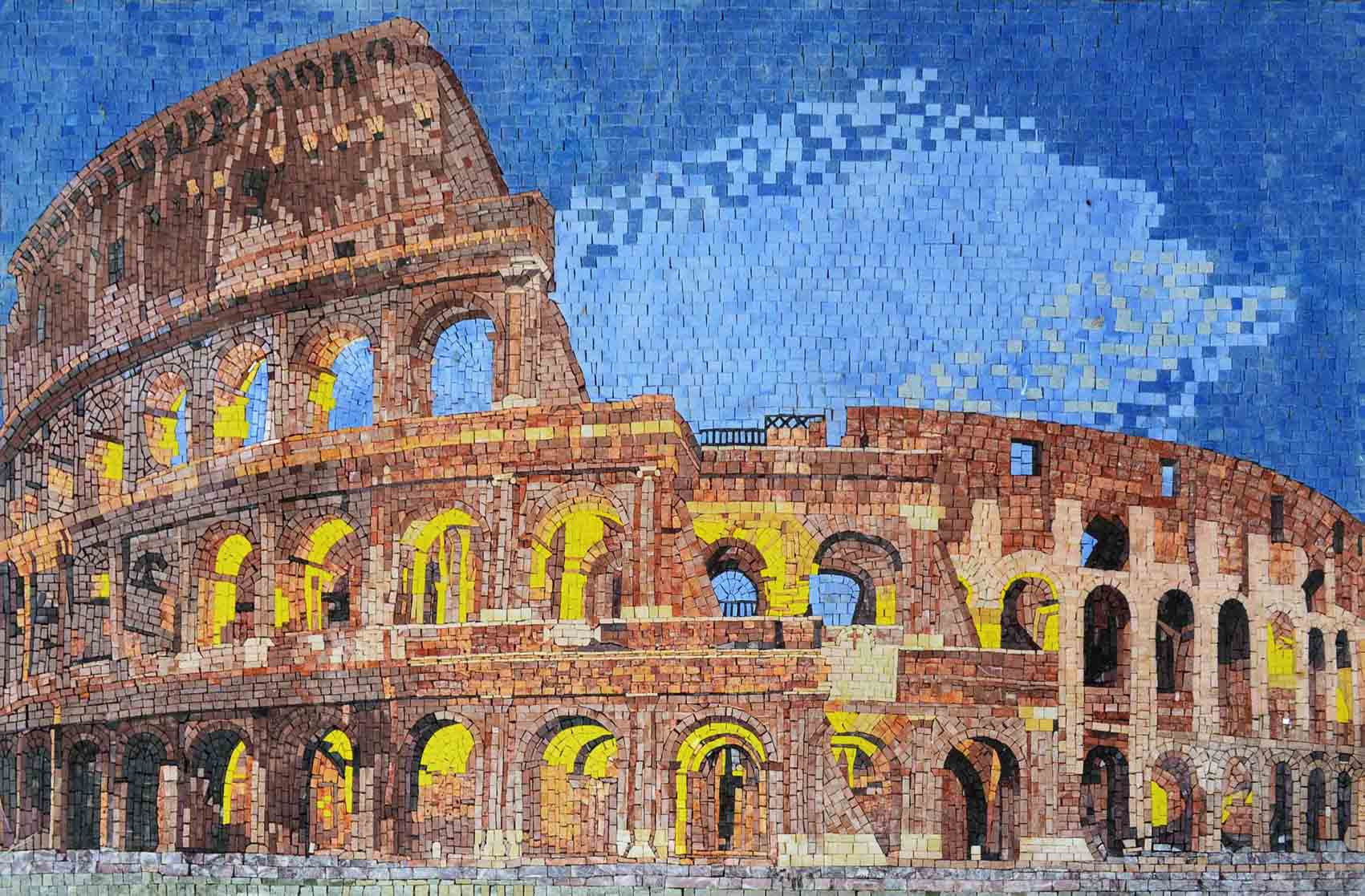
Coliseum de Roma – Marble Mosaic Artwork by Mozaico
Granite is derived from the Latin word “Granum” meaning a grain. This refers to its coarse-grained structure of crystalline. Also, it is a common type of meddling rock. Felsic rocks are known to be less solid than mafic and ultra-mafic rocks, and are made up of feldspar and silicates.
Moreover, granite became widely prominent through its applications inside the kitchen as a perfect counter-top, as it resists water, scratches and stains.
Today, granite mosaic tiles give a luxurious feel in steam showers, around Jacuzzi tubs and also on walls and ceilings.

Granite Mosaic Tessera

Abstract Granite Mosaic Artwork
Despite the fact that quartz is the most common mineral in the Earth’s continental crust, quartz is a true wonder of nature. Quartz is composed of oxygen and silicone, colorless and translucent in itself. However, it has some impurities. It’s these impurities that make it even more beautiful to look at.
For example, Amethyst has the SiO2 composition, typical to quartz varieties. It’s believed that impurities give amethyst its supernatural violet color. Quartz mosaic is available in various shades of color. Tiles are created by mixing natural quartz with resins. Today it’s widely observed in internal and external floor designs and in swimming pool designs.

Quartz Tessera in Swimming Pool


The most familiar and oldest types of glass are based on the chemical compound silicon dioxide, which is the primary constituent of sand. Ever since 2500 BC, glass was used. However there were significant barriers to the development of glass tiles, for example the high temperatures required to melt glass, and the complexities of mastering various curves for glass. In recent years, glass tiles have become as popular as marble for mosaic murals and accents.

Tessera made from Glass Smalti

Figurative Glass Mosaic
Sandstone is a clastic sedimentary rock composed of sand-sized minerals or rock grains. Sedimentary rocks are formed at the surface of the Earth, within bodies of water. Clastic sedimentary rocks are based on grain size, clast and cement material and texture. Typical to sand, sandstone may be of any colour, but the most common colours are tan, brown, yellow, red, grey, pink, white and black. Sandstone mosaics are usually used in patios, backyards and outdoors as floor and wall ornaments.

Tile made from Sandstone

Sandstone Patio Floor
Bauxite is the world’s main source of aluminium. It arises as a weathering product of low iron in tropical climatic conditions. For mosaic designers, aluminium is a perfect material to create an artwork. A soft, resilient, ductile and malleable metal, it ranges from silver to dark grey, depending on the surface roughness. Interestingly, it is nonmagnetic and doesn’t burst or catch fire easily, which made this material perfect for a kitchen backsplash or countertop.


Turquoise is a known substance. However, the word turquoise, dates back to the 17th century and is derived from the French word “Turques” for Turks. That’s because the mineral was brought to Europe from Turkey.
Additionally, African Turquoise varies from Gemstones to Beads. Each bead is unique with a different glow, sole lines and flecks. They are smudged in brown and green to manifest shades of nature’s magic.

Turquoise African Stone

Turquoise Beads – African
Fluorite is by far one of the most striking and interesting minerals available on the market. Nowadays, it’s used to make necklaces, earrings and rings. Also, blue and purple fluorite are used in puzzling mosaic artworks, assimilating an enchanting texture to the art of mosaic.
Read More about Amazing Facts of Fluorite.

Pink Fluorite Gemstone
Opal has a hydrated nebulous form of silica, which is a chemical compound, combining the oxide of silicone and another chemical formula. Moreover, the water content of opal can range between 3% and 21% by weight. Its nebulous character and non-crystalline nature classified it in the category of mineraloid instead of minerals. As a matter of fact, jewelry designers were always mesmerized by Opal. So, they inserted this fascinating gemstone in various objects like micro mosaics, rings, bracelets and chokers.
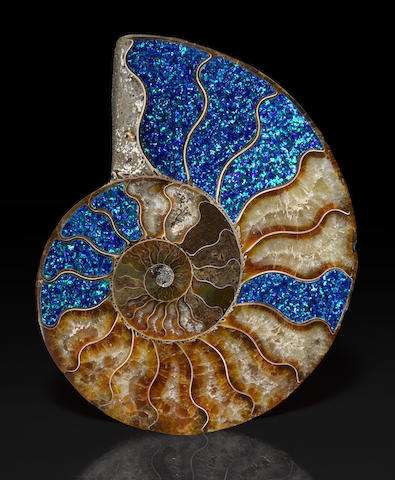
Mosaic made from Synthetic Opal

Opal Black Gemstone
Did you enjoy this article?
You might also like to: DISCOVER THE WORLD OF MICRO MOSAICS
Don’t Forget to Subscribe to our Newsletters for More Updates on Mosaic Art, Decor, Creativity and Much More!


 English
 French
 German
 Italian
 Portuguese
 Russian
 Spanish