


 English
 French
 German
 Italian
 Portuguese
 Russian
 Spanish
Ancient Mosaic Art
4 min read
7207
23
Delving into the world of Oriental Mosaics
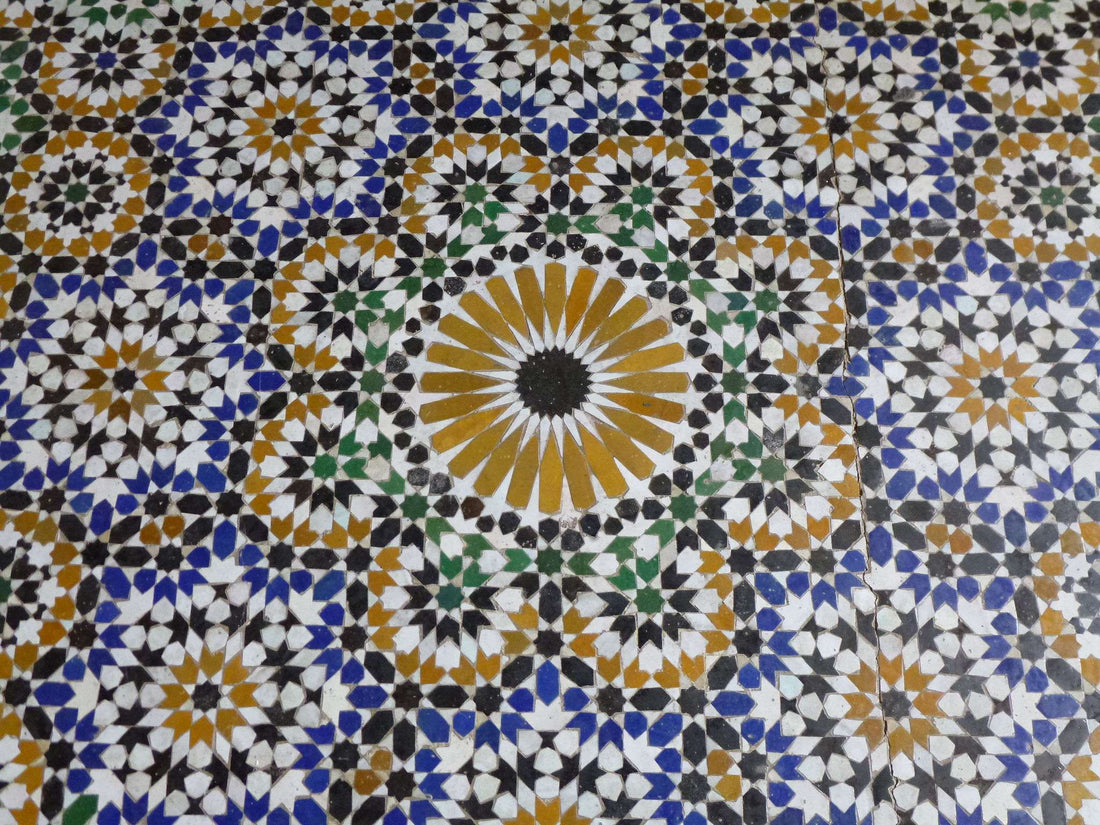
Mosaics are not strange to the Oriental world. Since the beginnings of the Muslim faith, mosaics had been used to symbolize the oneness of God who has no beginning and no end. Since it is forbidden in this religion, to represent God in the human figure, mosaics in the form of geometric and calligraphy have been created. As a result, Mosaic practitioners perfected tiling in a sequential and symmetric pattern.

Their religion focuses on the idea that the more the artist perfects the mosaic art, the closer he will get to God or the holier he gets. Since the patterns are an expression of faith, the repetition induces the nature of God; his divine and infinite nature. Moreover, due to the perfected complex geometric patterns, it wasn’t until the 1970’s the West’s Mathematicians understood them. This is to show you how important mosaics were in the Arabic world.

Most oriental mosaics consist of stars and polygon patterns which are complemented with lines atop them. This gives them a zip-zag formation. Fitting polygons together is a difficult process since they need to be aligned in perfect symmetry.However, as historians assume, a compass and a basic straight edge were used to get the job done. According to Peter J. Lu, a Ph.D. candidate at Harvard University, artisans back then made use of five different polygon shapes. As a result, their work became easier.
Mosaics still present today are those located in Mosques. We can recollect those that were used in such buildings:

Examples of oriental mosaics used are those that decorate the Dome of the Rock (688-692) in Jerusalem, the first Islamic marvel ever built. Its architecture and mosaics were originally patterned after Byzantine churches and palaces. However, when the Ottomans took over, its outside appearance has been radically changed to suit Islamic standards. As a result, oriental mosaics were lavishly fitted inside the dome. This mosque was augmented with marble columns, facings,and floral mosaic patterns.

Another instance is the Umayyad Mosque located in the old city of Damascus. It was initially constructed by Umayyad Caliph al-Walid to give the inhabitants a mark of superiority over the rest of the world. Mosaics placed there gave inspiration for additional similar works in and around the city. It is stunningly decorated with a band of architectural mosaics and golden floral stretching across the inside of the main prayer hall. These mosaics were related to passage within the Quran. As for the dome of this mosque, it is covered with fine strands of mosaic dating from the 13th or 14th century. Due to these lavish decorations, the mosque was used for a wide variety of purposes such as funerals, appointment of public officials, public announcements, and political rallies.
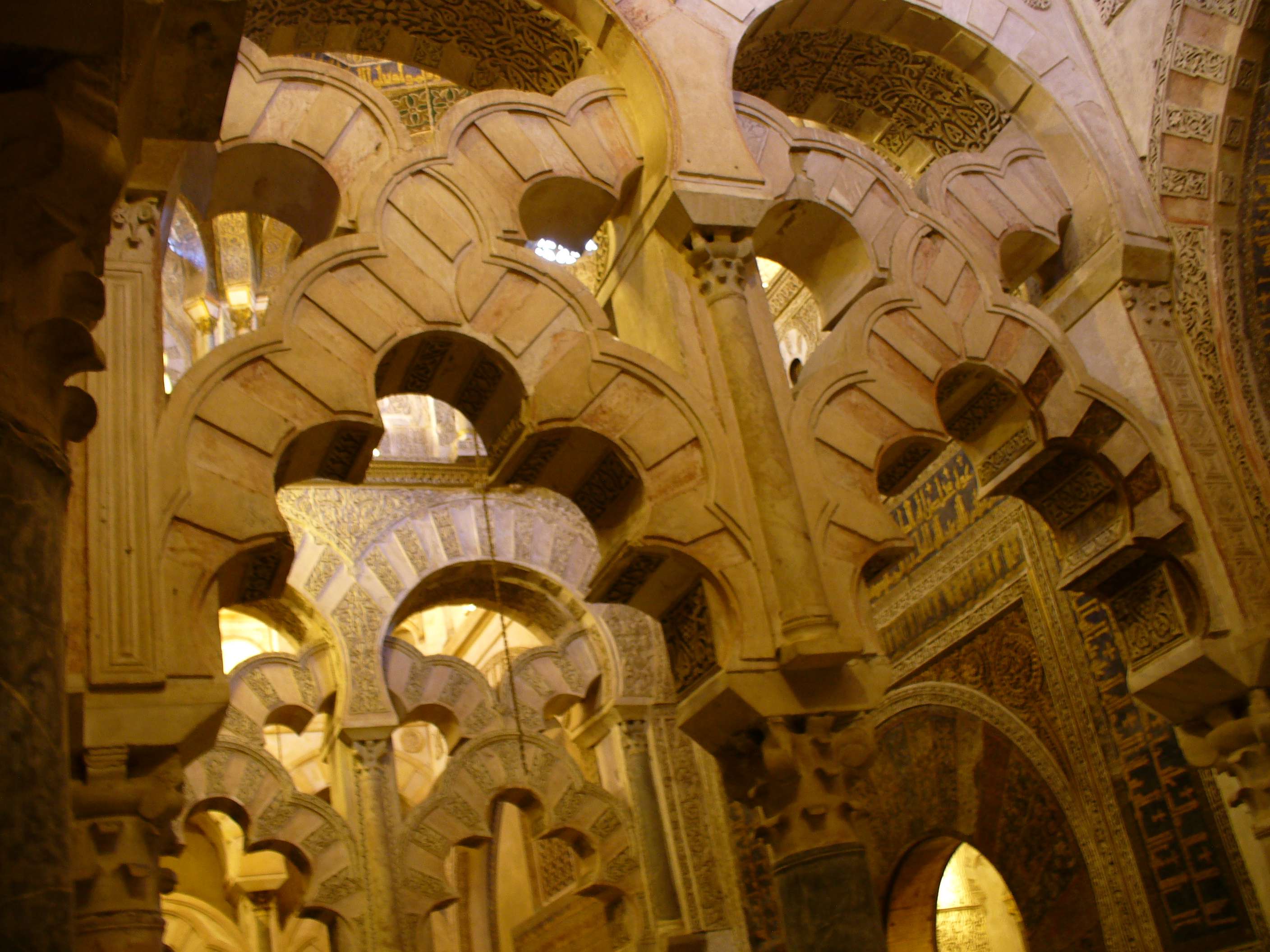
As strange as it sounds, it is also known as The Mosque–Cathedral of Córdoba located in Spain. The mosaics are composed of flamboyant floral arabesques and a wide selection of Arabic calligraphy.They were assembled between 965 and 970 by local artisans who were supervised by a master mosaicist from Constantinople.The aim was to imitate the appeal of the Great Mosque in Damascus. For instance, the dome of the mosque was built of crisscrossing ribs that form pointy
arches which are all extravagantly tiled with gold mosaic in a radial pattern. This unique building method paved the way for Gothic rib vaulting, although on a meeker scale.
When it comes to oriental mosaics, we can also take into consideration other two close variants:
Zillij, for instance, is a North African terra cotta tile work from Morocco. It is a geometric mosaic that is used in Moroccan architecture. To simply put it, Zillij is identified by a star-like pattern which is used to form squares. Usually, the stars come in a mix of colors.

Qashani is another instance of a variant. They are very similar to those mentioned in the Dome of the Rock in Jerusalem. The crafting of such mosaics requires a Persian technique of floral depicting. They were used to a wide extent in Sindh and Multan, two Pakistani provinces.

Enjoyed this article? Don’t forget to leave your comments below!
Don’t Forget to Subscribe to our Newsletter for Weekly Updates on Mosaic Art, Decor, Creativity and Much More!
Top Posts
View All

From Memories to Art: Transforming Bucket List Moments Into Mosaic Art Keepsakes

How to Hang Mosaic Art: Common Myths and Misconceptions

From Nature to Art: Capturing the Vibrance of Butterflies in Mosaic Design

Mosaic Art Trends in 2025: What’s Hot, What’s New, and What’s Next

Why Mosaic Art is a Must-Have for Patio Décor Enthusiasts
Latest Posts
View All

⚓ Diving Deep: Transforming Your Home with Nautical and Underwater Mosaic Wall Decor

The Ultimate Statement Piece: Why Mosaic Art is the Perfect Centerpiece for Eclectic Decor

✨Unlocked: Mozaico’s Biggest Sale of the Year is Here! Get Up to 25% OFF All Mosaics

🚀 Black Friday Is Coming: Here’s How to Make the Most of Mozaico’s Sale

Eco Mosaic at Mozaico: Turning Earth’s Treasures Into Timeless Art