


The distinctive elegance of Art Deco, a style born from the exuberance of the 1920s, continues to captivate designers and homeowners today. Far from being a mere relic of the past, Art Deco mosaics are enjoying a profound resurgence, celebrated for their ability to imbue any space with a sense of polished sophistication and timeless luxury. This powerful aesthetic, characterized by bold lines, rich materials, and intricate geometric mosaic patterns, offers a blueprint for creating interiors that are both visually stunning and profoundly artistic.

At its core, Art Deco is about harmony and proportion, a celebration of modernity expressed through opulent craftsmanship. The intricate nature of mosaic art, with its thousands of individually cut tesserae, lends itself perfectly to this design philosophy. Each piece contributes to a larger, cohesive vision, forming dazzling patterns that reflect light and create a sense of movement.
Crafting Precision: The Art of Art Deco Mosaic Creation
Creating an authentic Art Deco mosaic is a labor of love, demanding an artisan’s precise hand and an eye for perfect symmetry. Unlike mass-produced tiles, handcrafted mosaic pieces allow for subtle variations in texture and shade that bring depth and character to the finished artwork. The selection of materials is paramount; marble, granite, and shimmering smalti glass are frequently employed, each chosen for its unique color, sheen, and durability. The enduring beauty of Art Deco mosaic work lies in this precise material selection and placement.
Consider the detailed work involved: individual tesserae are cut with specialized tools, often by hand, ensuring that each piece fits seamlessly into the overarching geometric design. This meticulous approach guarantees crisp lines and sharp angles, essential elements of the Art Deco aesthetic. The interplay of light on the varied surfaces of natural stone and polished glass creates a dynamic visual experience, making the mosaic a living, breathing component of the architectural space.
Integrating Art Deco Mosaics into Modern Luxury Interiors
The versatility of Art Deco mosaic art allows for its integration into a multitude of contemporary settings, from grand commercial lobbies to intimate residential retreats. These geometric mosaic patterns can serve as striking focal points or as sophisticated accents, elevating the overall design narrative.
Grand Entrances and Statement Floors
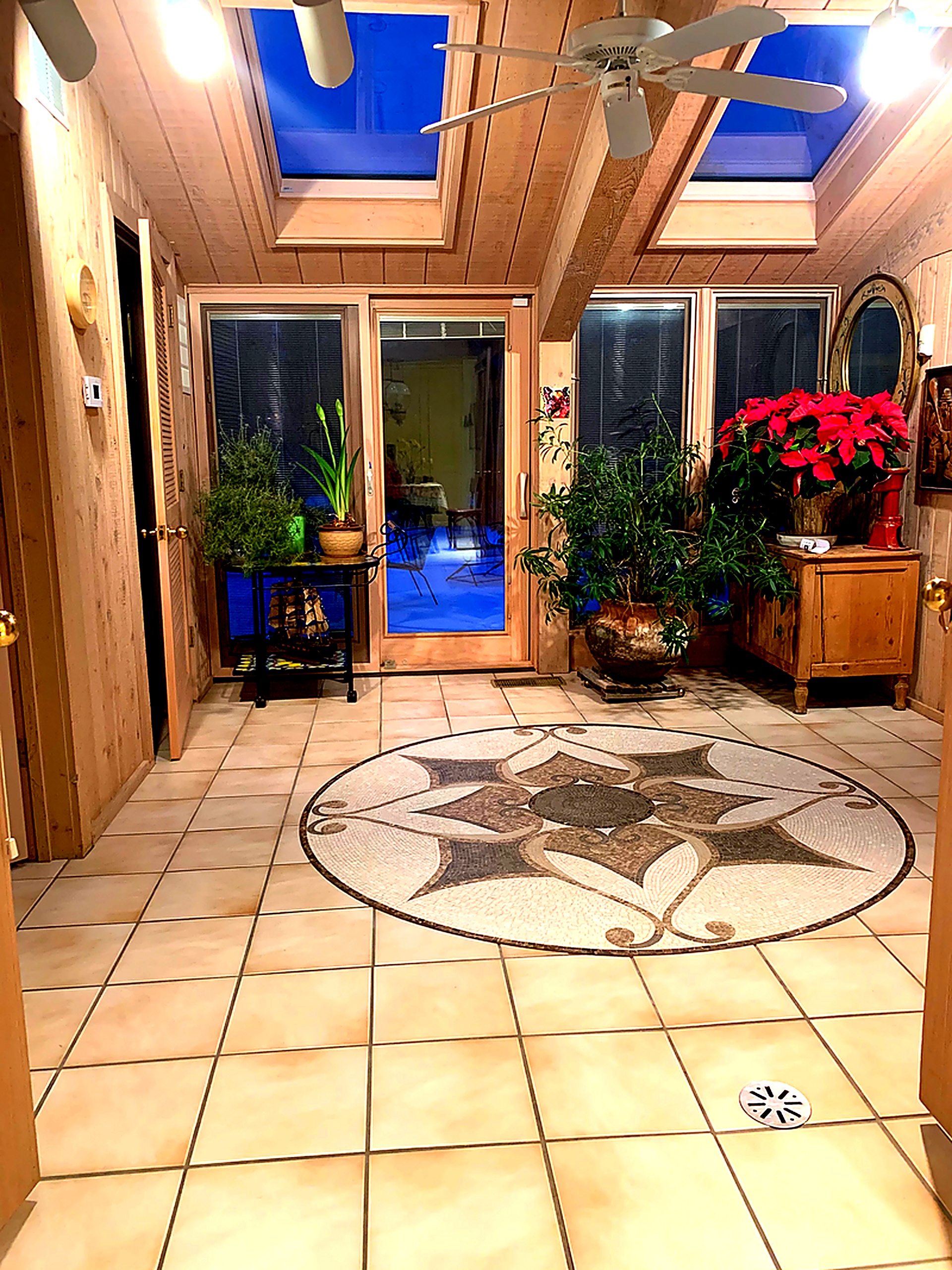
In entryways and grand halls, Art Deco floor mosaic installations immediately announce a home's aesthetic pedigree. A circular medallion with radiating lines or a rectilinear pattern extending the length of a corridor can transform a utilitarian space into an artistic journey. The use of contrasting colors, such as deep charcoal and bright white with gold accents, further emphasizes the geometric precision inherent in these designs. These are not merely floors; they are vast canvases where a homeowner’s vision is laid in stone, quite literally. Architects often seek to draw inspiration from existing Art Deco structures, blending historical reverence with modern interpretations. For expansive flooring projects, Mozaico offers a comprehensive suite of services that include material consultation and design assistance.
Dynamic Walls and Backsplashes
Beyond floors, Art Deco mosaics find their place on walls and backsplashes, introducing texture and visual interest. In a minimalist living room, a geometric mosaic panel can serve as a powerful accent wall, drawing the eye and anchoring the space. In kitchens, a backsplash adorned with Art Deco-inspired mosaic patterns provides a functional yet artistic element, protecting surfaces while adding a layer of visual richness. Imagine a kitchen where glossy black and white tiles form a zig-zag mosaic, reflecting light and adding a subtle Art Deco flair. The selection of glass or ceramic tesserae for these applications can introduce a beautiful shimmer, reflecting ambient light throughout the room.
Architectural Accents and Details
Art Deco’s influence extends to more subtle architectural details. Columns can be clad in vertical mosaic patterns, creating a sense of height and drama. Fireplace surrounds can be adorned with symmetrical mosaic motifs, turning a hearth into a stunning focal point. Even smaller elements, like door frames or mirror borders, can incorporate Art Deco mosaic designs, demonstrating a commitment to cohesive and thoughtful interior design. These smaller applications often leverage delicate materials, creating refined accent pieces that speak volumes about a space’s attention to detail.

The Enduring Appeal of Geometric Forms in Mosaic Art
The enduring appeal of Art Deco mosaics lies in their geometric precision, a design language that resonates deeply with principles of order, balance, and visual clarity. Triangles, squares, circles, and stepped patterns are meticulously arranged, creating a sense of dynamic energy that is both sophisticated and visually stimulating. This inherent structure ensures that Art Deco mosaic installations remain relevant, transcending fleeting trends. The clarity of these designs offers a refreshing contrast to more organic or fluid art forms, making them particularly attractive in minimalist or industrial-chic environments where clean lines are celebrated. Understanding the foundational principles of geometric mosaic patterns is crucial for any designer looking to implement this powerful aesthetic.
Materiality and Color: The Palette of Art Deco Mosaics
The material palette for Art Deco mosaic designs is as rich and varied as the patterns themselves. Highly polished natural stones like Carrara marble, rich black Marquina, and warm Travertine provide a foundation of enduring luxury. These are often juxtaposed with metallic tesserae, brass or copper, to introduce a captivating shimmer, or with vibrant smalti glass for intense bursts of color. The color schemes typically revolve around a sophisticated interplay of neutrals—black, white, cream, and gray—often accented with bold jewel tones like emerald green, sapphire blue, or ruby red. Gold and silver frequently appear, adding a touch of glamour that is unmistakably Art Deco. The strategic combination of these materials and colors is what gives Art Deco mosaic art its distinct character. The visual search tool for mosaic discovery can help designers explore different material and color combinations.
The Mozaico Difference: Customization and Craftsmanship
At Mozaico, we understand that true luxury lies in the ability to create spaces that are uniquely reflective of an individual’s vision. Our approach to Art Deco mosaic design combines historical reverence with cutting-edge artistry, ensuring each project is a distinct masterpiece. From initial concept to final installation, our team works closely with designers and homeowners to translate ideas into stunning, tangible mosaic artwork.
Our artisans specialize in hand-cutting every tessera, a practice that allows for unparalleled precision and artistic freedom. Whether you envision a grand foyer with a sweeping Art Deco floor medallion or a sleek bathroom with geometric wall mosaic panels, our commitment to quality and attention to detail remains unwavering. We champion the use of premium materials, from hand-selected Carrara marble to vibrant smalti glass, ensuring longevity and timeless beauty. Our custom mosaic design services ensure that every project is a precise reflection of artistic intent.
Mozaico Official Instagram Studio
A typical day at Mozaico! Starting the week in a grandiose ... - Aesthetics & Styling / Design Styling & Description: Starting the week in a grandiose way! Let us show appreciation for the things we love at Mozaico, from our craftsmanship to our designer picks!
Explore Mozaico on Instagram →The intricate nature of Art Deco mosaic art allows for incredible personalization. Colors can be adjusted to match existing decor, and patterns can be scaled to fit any dimension. This adaptability makes Art Deco mosaics a compelling choice for those seeking to create truly unparalleled environments. Explore our comprehensive luxury mosaic catalog to discover the full spectrum of possibilities.


