Close
Try Your Luck
With Mozaico
With Mozaico

Try Your Luck
With Mozaico
With Mozaico
Email Already Subscribed

we ship worldwide

money back guarantee

exclusive

630.300.3942
What can we help you with?
Shipping & Taxes. FAQ.630.300.3942
What can we help you with?
How to install a mosaic.Get one-on-one expert advice from our lead designer to help you transform any area around your home or work.
Fill out the form below to submit your designer question.
Take a picture of a room in your home, a floor area or a table top that you would like to ask a question about - or simply anything you would like to make into mosaics.

There are cities that look great in every tourist photos, and there are cities so beautiful that no photo, no matter how skillfully taken, could do the justice. Lisbon, Portugal’s city of light is definitely one of those magical cities!
Visiting the city of seven hills, you find yourself fascinated by the colonialist history, the ornate architecture and perceive the greatest and most impressive collection of Azulejo tile art in the world!
Today’s article explores the beauty of Azulejo tile art as one of the most influential art forms in Portugal and contemplating its splendor throughout the city of Lisbon.

Although they date as far back as the 13th century, the azulejos tile art secured their footing in Portuguese culture between the 16th and 17th centuries. The word azulejo stems for ‘small polished stone’. Originally they were fairly simple structures cut into geometric shapes in neutral hues. It wasn’t until Portugal’s King Manuel I visited Seville and brought the idea back, that Portugal truly implemented this art form into its culture.
Azuljo tile art is mainly used to cover up the large areas of blank murals and buildings that were common inside during the Gothic period. Antique azulejos were decorated in a pastel color palette, dominated by shades of blues and white. Later on, they brought new colors to their palettes like shades of yellow, gold and greens.
This art form tells the stories about the history, religion, and culture of Portugal.


In 1755, right after the earthquake which almost destroyed Lisbon, the city of 7 hills, saw a shift from Manueline architecture the Portuguese-Gothic style to Pombaline styles, which involves the application of Azuljo tile art.
Just as the Italians love to decorate their walls with painted frescos, the Portuguese love to create murals, and cover surfaces with azulejos tile art. Intricate and astoundingly beautiful, the traditional ceramic tiles of Lisbon often depict insightful scenes of its history. To this day, beautiful tiling can be still found all over the city of Lisbon. From Museu Nacional Do Azulejo and Fronteira Palace to factories like Viúva Lamego.


The National Tile Museum, also known as Museu Nacional do Azulejo is one of the most impressive museums to visit in Lisbon, by force of the fact it’s one of a kind in the entire world. Mosaic and tile art enthusiasts who want to get an insight into this art form worth should certainly explore this Portuguese museum, where they can admire an artwork consisting of about 1,300 tiles and measuring 53 meters in length. This artwork renders the city of Lisbon as it used to look like before the 1755 earthquake, dating back to 1738. You can also explore other tile art showcased in this museum which, by some visitors’ opinion, is one of the tourist sights not to be missed out once in Lisbon.

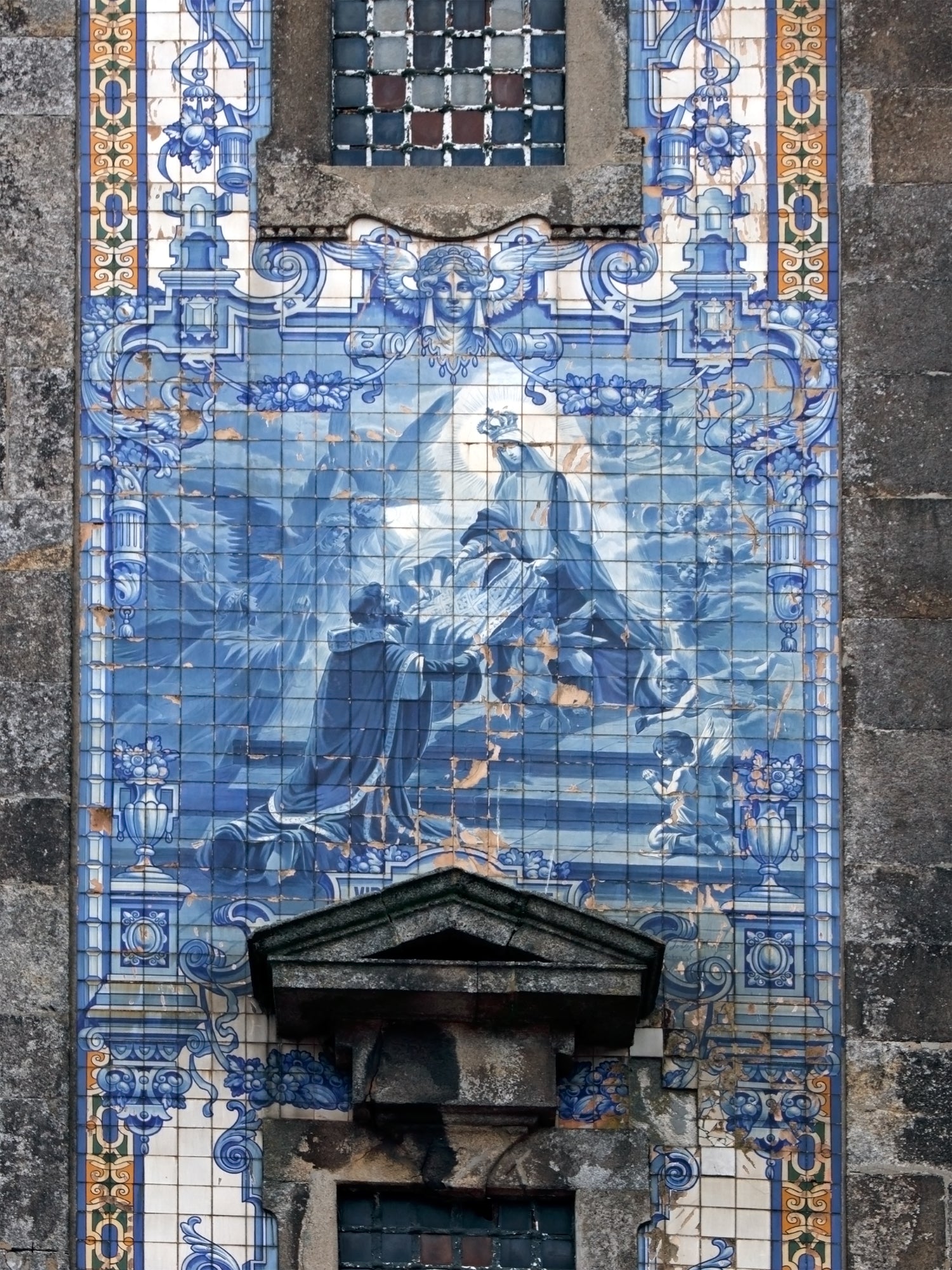
Have you ever been to Portugal? In one word, how would you describe this city? Share your thoughts with us about Portugal’s city of 7 hills and let us know if you have visited other cities enriched with tile art and mosaics!
Got inspired by reading this article?
You May Also Want To Read: The Tile Art Spell of Morrocco’s Blue City
Don’t forget to subscribe to our Newsletter for Weekly Updates on Mosaic Art, Décor, Creativity and Much More!


 English
 French
 German
 Italian
 Portuguese
 Russian
 Spanish


