Close
Try Your Luck
With Mozaico
With Mozaico

Try Your Luck
With Mozaico
With Mozaico
Email Already Subscribed

we ship worldwide

money back guarantee

exclusive
630.300.3942
What can we help you with?
Shipping & Taxes. FAQ.630.300.3942
What can we help you with?
How to install a mosaic.Get one-on-one expert advice from our lead designer to help you transform any area around your home or work.
Fill out the form below to submit your designer question.
Take a picture of a room in your home, a floor area or a table top that you would like to ask a question about - or simply anything you would like to make into mosaics.


Mosaic art is an image or pattern assembled from many small pieces — tesserae — fixed to a surface with mortar or cement. The pieces can be stone, marble, glass, ceramic, shell or found objects. What makes it mosaic is that the picture exists because of how the pieces are arranged, not because anything was painted on them.
It is one of the oldest surviving art forms. Mosaics appear in Mesopotamia around 4000 BC, and the craft has been in continuous use ever since — which is unusual. Most ancient media were replaced. Mosaic was not, because nothing else does what it does: it survives outdoors, it holds colour for millennia, and it changes as the light moves across it.
Everything divides into two categories, and the distinction is useful when you are choosing a piece.
| Type | What it is | Typical use |
|---|---|---|
| Tessellated | Geometric shapes forming a repeating pattern, with no depicted subject | Floors, borders, backsplashes, architectural surfaces |
| Pictorial | A recognisable image — figures, landscapes, mythological scenes, portraits | Feature walls, panels, focal points |
A single floor often uses both: a pictorial panel at the centre inside a tessellated border. That arrangement is two thousand years old and still the most reliable composition in the medium.


Material is the first real decision, because it determines weight, durability and cost more than the design does.
| Material | Advantage | Trade-off |
|---|---|---|
| Stone and marble | The most durable; holds fine detail | Heavy |
| Glass | Lightweight; vivid colour; reflective | More fragile |
| Ceramic | A balance of the two; wide colour range | Can crack outdoors |
| Smalti | Italian hand-cut glass; the traditional artist's material | The most expensive |
For a fuller comparison, including which material suits which room, see our guide to mosaic art versus tile art.


There are two broad approaches. The direct method sets tesserae straight onto the final surface — faster, cheaper, and the only option for three-dimensional objects, though it limits how flat the result can be. The indirect method builds the mosaic on a separate surface and transfers it, which gives higher quality, better durability and the flexibility to use custom-cut tesserae, delicate materials and complex patterns. It is also what makes curved and irregular surfaces possible.
There are four methods in total, and which one applies depends on the surface rather than on skill. Our guide to mosaic techniques covers all four, along with micro mosaic.
The short version of a very long history.
Mosaics begin in Mesopotamia around 4000 BC, using small coloured stones to decorate surfaces. The Greeks developed it into an art form, reaching a peak around the 6th century BC with more elaborate designs and the introduction of glass and semi-precious stones. The Romans spread it across an empire, covering temples, palaces and public buildings, and produced the Alexander Mosaic — Alexander the Great's victory over Darius III, and still the most famous mosaic ever made. Byzantine workshops then turned to gold and coloured glass tesserae for religious work.
After a long decline the 19th century brought a revival, with artists exploring new techniques and materials, and the invention of modern glass mosaic widened the available colour range dramatically. In the 20th century artists pushed into abstract and surreal composition, which is broadly where the medium still sits.
Two of these periods have guides of their own: ancient Greek mosaics and Roman mosaic techniques.


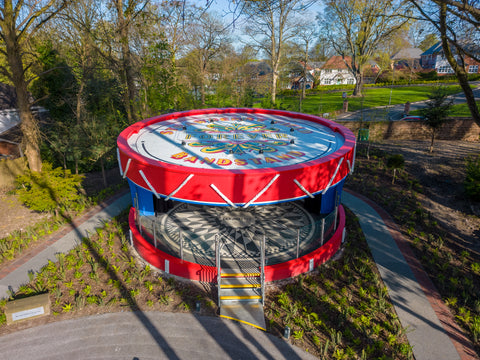
Contemporary work spans classic, geometric, impressionist and abstract styles, and the range is wider than at any point in the craft's history — partly because the colour range is. Modern custom mosaics draw on traditional design while using materials and installation methods that did not exist a century ago.
The practical case is as strong as the aesthetic one. Mosaic is durable and low-maintenance; sealed properly it needs little more than washing. And it is one of the few art forms that genuinely belongs in a wet room, a garden or a pool.
There is a less obvious benefit too. Commissioning or making a mosaic is an unusually direct form of self-expression — the colours, the subject and the scale are all chosen rather than selected from a catalogue — and the finished piece changes the atmosphere of a room in a way a print does not, because it has physical texture and it responds to light.


Architects have rediscovered mosaic, and for reasons that are only partly about appearance.
It tells a story. A mosaic mural can carry local heritage and cultural narrative into a building in a way that cladding cannot, which is why civic and public projects keep returning to it — it gives a building an identity tied to its place.
It survives. Mosaic surfaces are weather-resistant and hard-wearing, so they work on exteriors as well as interiors. Recycled glass and reclaimed stone also make it a reasonable choice where sustainability matters.
The landmark examples make the case better than any argument:
Architects do have to weigh it honestly: mosaic installation is more complex than tiling, it costs more, and it needs maintenance. What it buys is a surface nothing else can produce.


The most interesting contemporary work combines the two, and there is a method to doing it well rather than producing a muddle.
Traditional motifs bring historical depth: Roman meanders, Byzantine gold tesserae, Islamic arabesques. Modern techniques bring clarity: geometric abstraction, monochrome palettes, minimalist repetition.
Three rules make the combination work:
Materials can be layered the same way: traditional smalti alongside polished glass or marble gives tactile contrast that reads as deliberate fusion rather than compromise.


All mosaic designs · Custom mosaics · Ancient mosaic designs · Mosaic art kits · Mosaic glossary
An image or pattern assembled from many small pieces called tesserae — stone, marble, glass, ceramic or found objects — fixed to a surface with mortar or cement. The image exists because of how the pieces are arranged.
Two: tessellated mosaics, which are geometric patterns with no depicted subject, and pictorial mosaics, which show a recognisable image such as a figure, landscape or mythological scene. Many floors use both, with a pictorial panel inside a tessellated border.
The small individual pieces a mosaic is built from. The word is Latin, and the pieces can be cut stone, marble, glass, smalti, ceramic or shell.
Mosaics appear in Mesopotamia around 4000 BC. The Greeks developed it as an art form, peaking around the 6th century BC, and it has been in continuous use since.
Direct means setting the pieces straight onto the final surface — faster and cheaper, and the only option for three-dimensional objects. Indirect means building the mosaic separately and transferring it, which gives a flatter, more durable result and allows complex patterns and curved surfaces.
Stone and marble are the most durable but heavy; glass is lightweight and vivid but more fragile; ceramic sits between the two. Choose for the location first.
Yes, which is one of its main advantages. Mosaic is weather-resistant and holds its colour outdoors, where paintings and printed surfaces cannot survive.


1 comment
Thanks for the kind words! We’re happy this information is helpful.